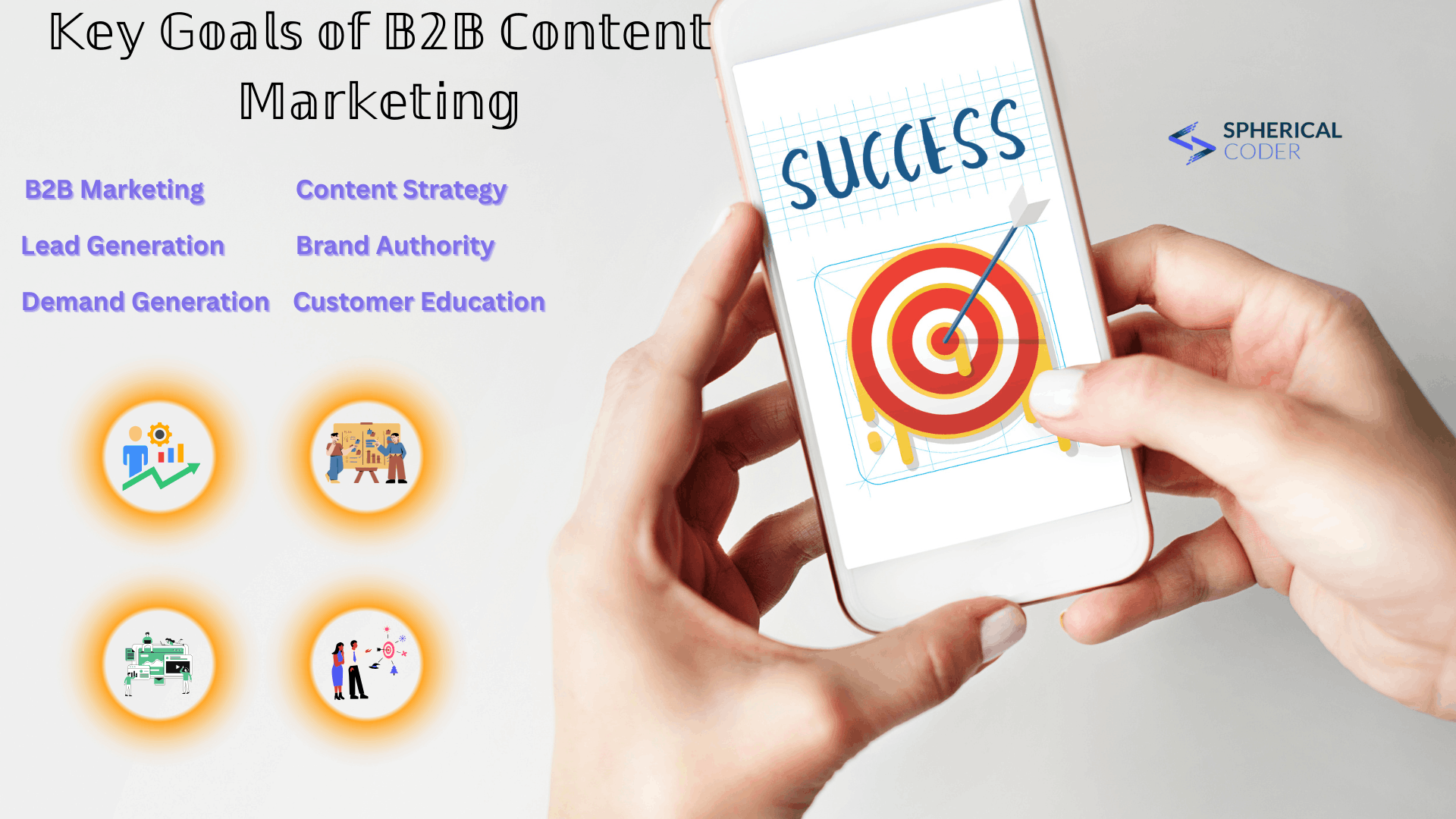
Key Goals of B2B Content Marketing
B2B content marketing drives quality leads, strengthens brand trust, and helps convert target businesses with strategic, value-driven content.
Key Goals of B2B Content Marketing
1. Lead Generation
Content marketing for B2B companies is a powerful way to boost leads, solidify brand image, and convert the businesses you are targeting. With over 73% of B2B marketers using it as part of their overall marketing strategy, it is clear that businesses are seeing the value it can bring. One of the biggest benefits of content marketing lies in its cost-effectiveness. Leads generated through content marketing cost 62% less than traditional marketing leads, making it an attractive option for companies looking to optimize their budgets.
Defining Lead Gen Goals. The process does not work unless Google Analytics is properly configured with goals in direct relation to how they support business objectives. The first step is finding what content assists in a user completing one of those predefined goals.
Measuring Lead Gen. Using Google Analytics enables measuring the content meeting the lead generation goals. To measure an increase in new prospects, first open Google Analytics, then click Conversions and Goals, and select the Overview report. This is followed by setting the date to the observed time period, setting goals to source/medium, and finally view number of goal completions for organic by goal type.
2. Increase Brand Awareness
Brand awareness is the level of familiarity that consumers have with a particular brand, measured by how well consumers can recognise the brand’s logo, name, products, and other offerings. However, a true brand awareness means a prospect understanding brand’s character, values, and offerings. When considering new software, companies are more likely to choose a brand they recognise and associate with quality and reliability. The effect of familiarity makes brand awareness a critical first step in any content strategy.
Content types to consider for supporting brand awareness:-
1.Storytelling. Crafting a narrative around your brand humanizes it and gives something real for people to connect with. As authenticity has a powerful influence on public opinion, it can lead to a big impact on brand awareness.
2. Guest blogging. The purpose of guest blogging is to offer actually helpful content. Leveraging these site get more eyes on your brand.
3. Podcasts. It providing opportunity for educating, entertaining, and grabbing the ear of your audience in a way that is not possible in print.
It is a little difficult to gauge a brand awareness campaign’s performance. Google Analytics does not record all of the offline discussions among coworkers, sentiments of trust, and favourable associations.
3. Thought Leadership
For a brand, being recognized as a thought leader means being perceived as an authoritative voice in their industry, embodying a great trust and creating a legacy for generations. In B2B, thought leadership content shares expertise, insight, and forward-thinking ideas from industry leaders. This demonstrates not only what your business does, but why it matters and where the market is going.
Benefits of thought leadership for B2B brands include building trust & brand credibility, positioning your brand as an industry authority, influencing decision-makers at the top of the funnel, and boosting organic reach & SEO.
Understanding your audience and conveying valuable insights accordingly is the best way for creating thought-leading content. Furthermore, in measuring the thought leadership, think of what it means to lead; a good leader has a growing base for users who are excited about the content, which is either shared through eNewsletter, YouTube channel, podcast, or social media group that you would be able to track their subscribers, opens, views, and shares.
4. Improving Organic Share of Voice
Share of Voice (SOV) is a well-known powerhouse metric when it comes to marketing and advertising. It helps businesses understand their competitive landscape by measuring their visibility against rivals. Traditionally known only for paid media, the Share of Voice metrics have been expanded to organic search and social media.
Identifying your competitors’ strengths and weaknesses is key to setting your brand apart. One way to “crush the competition” is to improve organic share of voice.
Defining and Measuring organic SOV goals
Calculating organic share of voice is not straightforward but possible with the use of tools that compare your search visibility for your target keyword to that of your competitors. To do it using Ahrefs Rank Tracker, first open Ahrefs Rank Tracker, paste a list of your ain main keywords, followed by adding competitors' domains. Click the competitors report in the overview tab, and then finally view the visibility metric to see your organic share of voice.
5. Reducing Roadblocks
When executives in business-to-business (B2B) markets think about pricing their products, they often raise the white flag before even stepping onto the battlefield. During content strategy sessions, evaluate why users did not choose your company.
By addressing the reasons why potential customers are declining, your business can either demonstrate that it offers the product or service that they were seeking or explain why it is superior to what they believe they require.
6. Educational/Informational
Educational content embracing the customer’s desire to be taught, revealing new information in a digestible way. It also provides clear action items to capitalize on new learnings, customers want to feel empowered by a product or service and how it is delivered to their inbox, doorstep, or online account. Brands need to craft a marketing approach that includes a consistent drip of useful, educational content designed to speak to product or service value, explaining offerings work with current technology options, and staying mindful of current social conversations and how they spark new ideas and questions relevant to the industry.
Defining educational goals is different, and you definitely do not need to invest in creating a whole new channel; use the features within the channel that are already working for you. Further, measuring the success of informational content is a bit fuzzy as education is unnecessarily a linear process, and users view information based on what they are doing at the time and what they want to read, not how they draw it out in storyboards.
7. Increase User Engagement
Customer engagement, its importance for your business, and actionable strategies to enhance your B2B client engagement. Successful engagement with individual customers can produce a ripple effect that not only helps secure your existing book of business but can also open new opportunities.
Defining goals and measuring user engagement
Use of Google Analytics 4, user engagement is best measured. Engaged users are more inclined to upgrade, renew their subscription, and refer others to your business. You must identify your top-performing pages for this metric and determine why in order to set user engagement goals.