Mastering On-Page SEO: Factors To Consider For Higher Rankings
Learn the key on-page SEO factors that improve search rankings, optimize content, and boost organic visibility.
Mastering On-Page SEO: Factors To Consider For Higher Rankings
On-Page SEO vs. Off-Page SEO
On-page SEO refers to things you can do on a webpage to improve its search engine rankings. While off-page SEO refers to things you can do outside your website to improve its search engine rankings. Generally, on-page SEO makes your content better for users and search engines. It may involve writing unique titles for your pages, adding links between pages on your site, and optimizing images on your site.
On the other hand, off-page SEO is mainly about improving a website’s reputation, which involves getting other websites to link to your site, promoting the brand on social media, and managing your reviews on external platforms.
What is On-Page SEO?
On-page SEO, also known as on-page optimization or on-site SEO, refers to the process of optimizing the elements on a specific web page. These elements may be visible to the user or the search engine. For example, on-page SEO consists of optimizing meta descriptions, title tags, and other HTML elements that would be discussed later, which aren’t shown to the website visitor and are instead used by search engines to learn about the content of the page and effectively rank the page in SERPs.
On-page SEO playing important role in enhancing a website’s visibility on the Google search engine. By optimizing various elements on your web pages, such as meta descriptions, title tags, and headers, you can significantly improve your search engine rankings and attract more organic traffic.
Factors impacting SEO
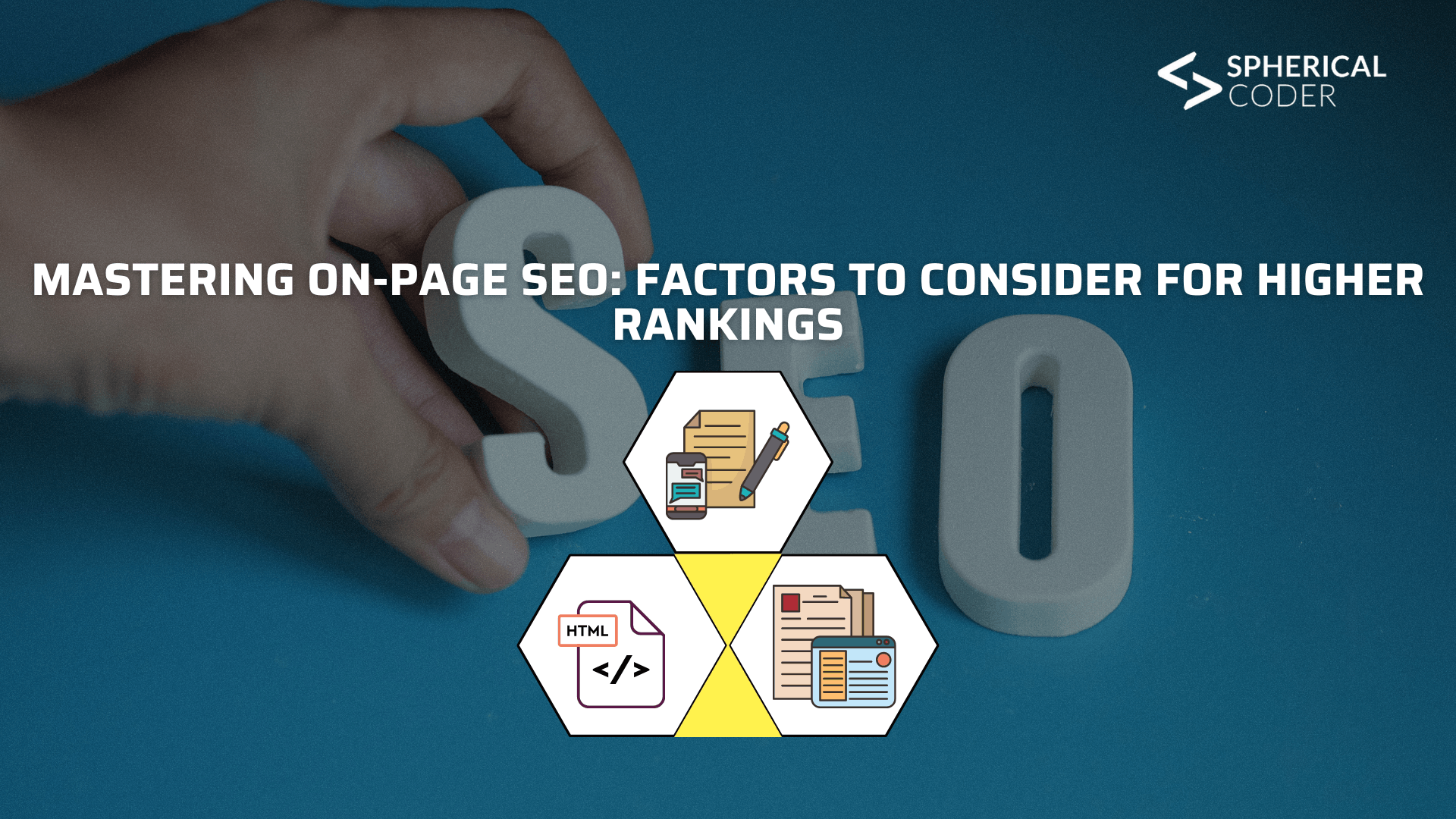
Some of the essential On-page SEO factors include Content, HTML, and Website Architecture.
Content
Content factors to consider include E-E-A-T, Keywords, SEO Writing, Freshness, and Visual Assets.
Google’s automated systems are designed to use many different factors to rank great content. after identifying relevant content, our systems aim to prioritize helpful content. While E-E-A-T itself isn't a specific ranking factor, using a mix of factors that can identify content with good E-E-A-T is useful. Keywords foundation of SEO writing playing an important role in helping attract visitors and boost rankings. By understanding keywords, you can deliver the information your ideal audience is actively searching for and ensure your content is keyword-optimised, boosting traffic and establishing more authority and trust. Freshness is another one of these factors, which refers to new, relevant, and up-to-date information or pages added to the website and can take various forms like blog posts, news, articles, or any other content type.
HTML
HyperText Markup Language or HTML is used for structuring your webpage and content, telling user’s browser where to display what on the page, and also tells search engines what your page is about. On-page SEO HTML factors need to consider Title Tags, Meta Description, Image Optimization, and Geotagging (For local search).
The title tag, the clickable headline appearing on search engine results pages (SERPs), browsers, and social media platforms, acts as a webpage’s headline, or page title, and helps users and search engines understand the page’s content. Meta tags in SEO describe the content and information appearing on your webpage to search engines, and also help web browsers to understand displaying content to users, which is a crucial aspect in website optimization. Further, SEO image optimization is key to getting search engines to find, understand, and show your images for relevant queries. Image optimization isn’t just about getting better rankings but about giving users the best possible experience. Faster, more accessible, easier to load images mean users get what they want, and they get it fast. The last factor to consider in HTML is geotagging that are metadata elements embedded in image files containing location-specific information like latitude & longitude, altitude, place names, and GPS timestamp.
Website Architecture
Website architecture directly impacts usability and SEO success. A clear, logical structure helps users find what they need faster and signals to search engines what your site is about. If done right, it reinforces topical authority, supporting long-term growth, and makes your content easier to crawl. Factors to consider while optimizing your site’s architecture include Site Speed, Responsive Design, URL Structure, and Links.
Page speed metrics measure each event, showing how fast a page loads compared to Google’s thresholds. It is a confirmed ranking factor on both desktop and mobile. Google has stated outright that extremely slow pages are less likely to rank well. Google cares about page speed because slow sites provide a poor user experience (UX). Responsive design includes mobile responsive design, which accounts for the majority of global web traffic; businesses failing to prioritize mobile friendly website risk losing customers, engagement, and search engine rankings.
URLs, when chosen to optimize increase your website traffic. An optimized URL provides both search engines and users an easy-to-understand guess of what the landing page is about. And SEO-friendly URLs can affect your website in more ways than just ranking.