Are Advertisers Losing Control to AI in Paid Search?
AI powers modern paid search, leaving advertisers to adapt to automation rather than control every detail.
Are Advertisers Losing Control to AI in Paid Search?
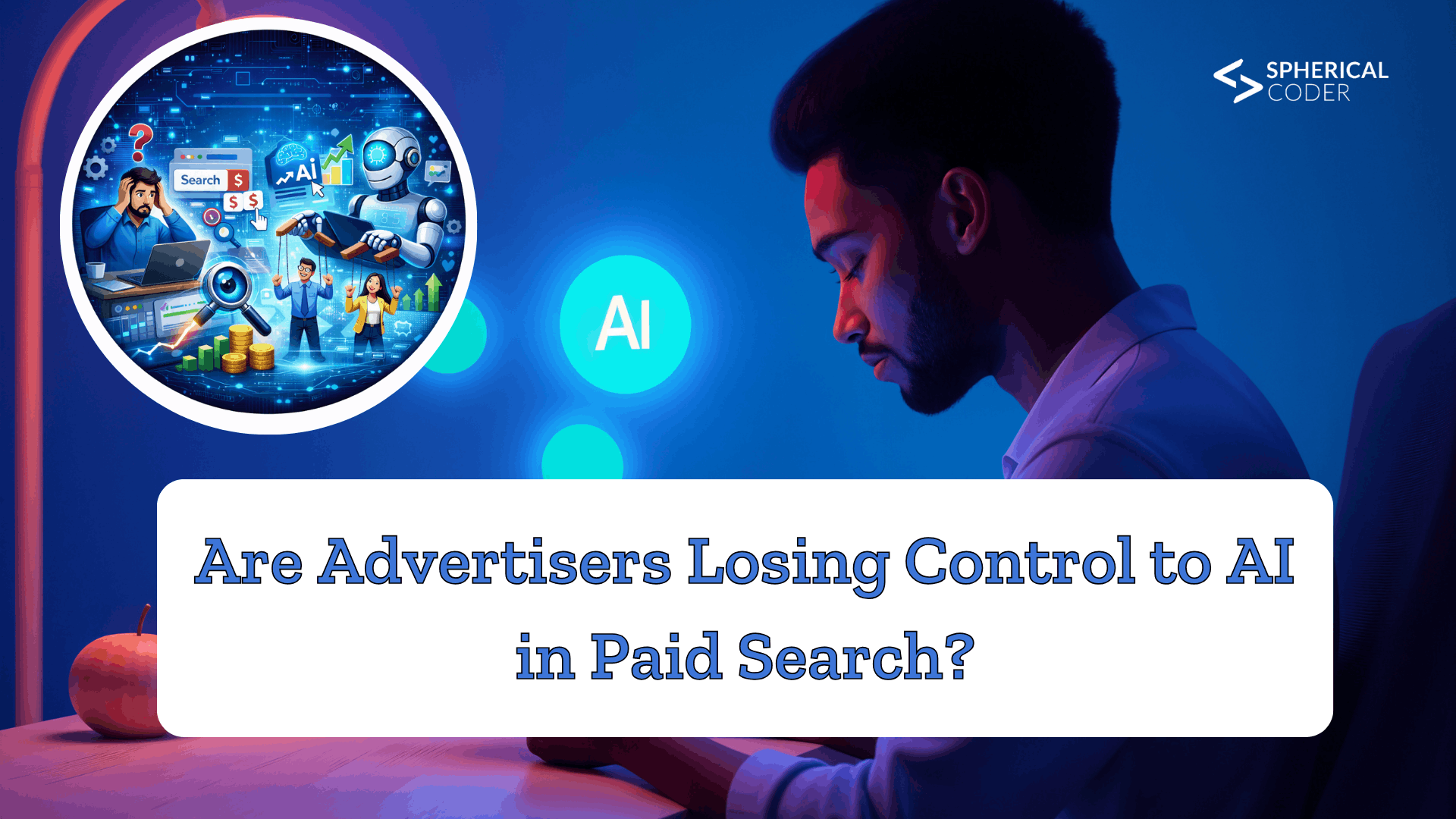
In paid search, artificial intelligence is now the foundation, not a concept of the future. From fully AI-driven campaign types like Performance Max to automated bidding, platforms like Google have gradually moved control away from human inputs and toward machine learning systems. An essential question for the industry has been raised by this evolution: Are advertisers really losing control, or are they just using a different approach to campaign management?
The Shift from Manual to Machine-Led Optimization
Granular keyword targeting, manual bid adjustments, and thorough search term analysis were crucial to PPC success not too long ago. Advertisers had direct control over audience layering, match types, and device modifiers, among other things. Much of that complexity is now handled by automation. Broad match makes use of behavioral and contextual cues. Budgets are allocated across several channels by Performance Max without the need for human placement selection.
This increases scalability and decreases workload, but it also restricts direct control. The levers that advertisers use daily are now automated or eliminated.
What “Losing Control” Really Means
Performance isn't always the issue, as automated campaigns produce excellent outcomes. Transparency and decision-making visibility are the problems.
Advertisers often have limited access to:
- Full search term data
- Detailed placement reporting
- Auction-level insights
- Exact bidding logic
Marketers must have faith in the system's optimization process when marketing decisions are made within a "black box." This change may be unsettling for companies used to thorough reporting and manual accuracy.
A New Type of Control: Strategic Input
Success in the AI-driven paradigm is more dependent on improving inputs than on micromanaging results. Today, advertisers affect performance in the following ways:
- High-quality creative assets
- Strong audience signals
- Accurate conversion tracking
- First-party data integration
- Clear campaign objectives
Marketers concentrate on providing the algorithm with stronger indications rather than making hourly bid adjustments. Humans determine direction; AI maximizes execution.
This represents a shift from tactical control to strategic control.
The Benefits of AI-Driven PPC
Automation isn't always bad. AI systems assess enormous volumes of data from devices, time signals, user intent, and contextual behaviors more than humans can.
Benefits include:
- Real-time bid adjustments
- Cross-channel optimization
- Faster learning cycles
- Scalable campaign management
- Improved efficiency in competitive auctions
For many advertisers, these advantages outweigh the loss of granular control.
Final Thoughts
Is AI taking over for advertising in paid search? Yes, in certain tactical domains. Strategically speaking, however, control still firmly rests with people who know how to direct automation. Collaboration, not human vs machine, is the way of the future for PPC. AI-driven systems will continue to grow on platforms like Google, but the most successful advertisers will be those who blend human insight with machine efficiency